Home
Home
 Info
Info


Location matters
Order fish up in the Cumbres and you'll get frozen fish (and probably a long-suffering sign from the waiter). In fact, don't order fish anywhere in Gran Canaria where you can't see the sea or where the fish isn't on display. There's anything wrong with frozen fish; we'd much rather have a freshly defrosted fillet than a stale fresh one.
Order fish in a grill restaurant and you'll definitely get the eyebrows from the waiter. Grills do cow, lamb and pig but put fish on the menu to cater to the awkward squad. If you want turf, go to a grill, if you want surf, find a fish restaurant by the sea.
Look your dinner in the eye
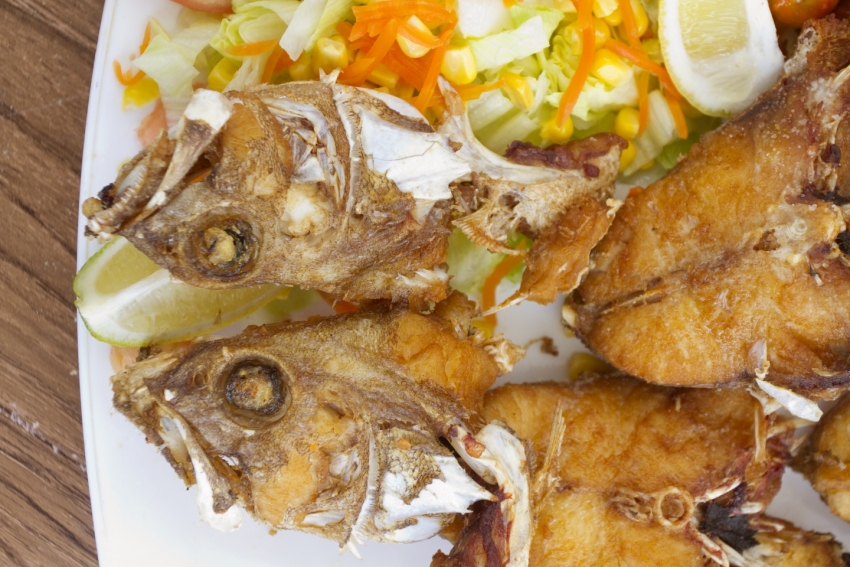
A fresh fish looks like it's just come out of the water: shiny and wet with a glossy, clear eye that bulges outwards. Any sign of dry fins or skin, shrivelled eyes or gills and you're looking at a fish that's been out of water for too long. Fillets should be plump and moist with no dry bits at the edges. If a fish smells of fish, then don't eat it: Fresh fish smell of the sea.
Know your fish
The freshest fish in many resort restaurants are seabass (lubina) and gilthead bream (dorada) delivered daily from the east coast fish farms. Neither species lives around the Canary Islands so they can't be wild caught. Again, nothing wrong with farmed fish provided you know what you're getting and paying for.
If local fishermen are catching sardines (sardinas), mackerel (caballa), whitebait (longorones) or horse mackerel (chicharros), you'll know about it as all the fish restaurants will have them on the daily menu boards. They are often the freshest fish on offer but come and go as the schools migrate past the islands.
Where there's little fish there's always tuna: Look out for signs advertising fresh bonito and atun.
Small, inshore or shore caught fish in Gran Canaria are tossed in flour and grilled or deep fried. They are sold as pescado de barquillo in restaurants and you often pay by weight. Since the water off Gran Canaria gets deep fast, there isn't a huge amount of small fish to go around so prices can be high. Expect to pay 20 euros for a plate with several small fish. The most common are striped bream (sargos), pink bream (breca) combers (cabrillas), parrot fish (viejas) and red mullet (salmonetes).
Most big fish, especially blue fish is frozen. This kills parasites as well as keeping it fresh.
Seafood
Almost all seafood is imported to the Canary Islands as the water gets deep fast. Squid and octopus may be caught locally, but all shellfish and prawns come from northern Spain or even Britain and Ireland (the British eat it on holiday but not at home). Most is frozen but classier restaurants serve the fresh stuff.
Alex says: You don't want to eat fresh octopus as it's tough. In the old days people used to bash them against a rock for a few minutes to tenderise them but freezing works just as well. Squid freezes perfectly so there's no need to worry about freshness.
Enjoy your fresh fish and seafood in Gran Canaria and if you have any questions just ask us.